
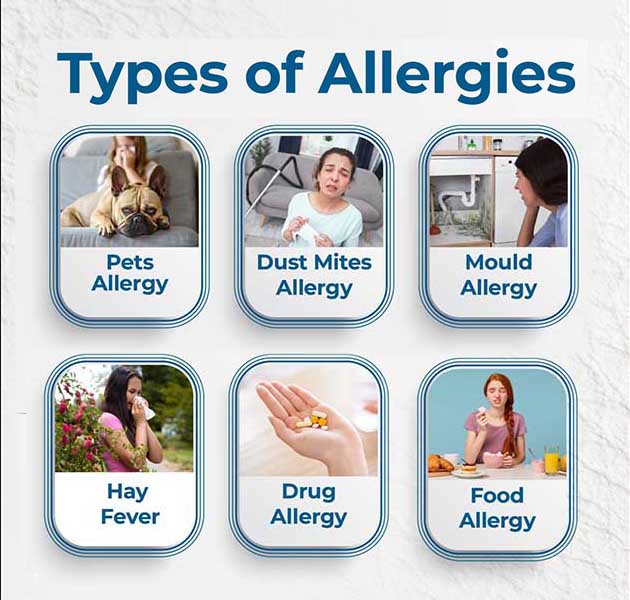
Allergies
Immunoglobin E (IgE) are antibodies produced by the immune system. If you have an allergy, your immune system overacts to an allergen by producing antibodies called Immunoglobin E (IgE).
These antibodies travel to cells that release chemical mediators including histamine, causing an allergic reaction. The histamine created usually causes symptoms in the nose, lungs, throat, digestive system and skin.
How Allergic Reactions Can Develop
Each type of IgE has a specific ‘radar’ for each type of allergen, but that allergen can have hundreds of proteins which have a cross reaction with other allergens such as pollen, latex, perfume, mould, insects and more.
Today, at least 44% of adults suffer with an allergy of some sort. By 2030 it has been reported that 30 million people in the UK will have some sort of allergy. The most common form of allergy is pollen-linked food allergy which gives allergic rhinitis (hay fever) symptoms. This is where the body mistakes a fruit or vegetable for various pollens.
Some people may have an inherited tendency towards allergies, a condition known as atopy. Atopic individuals are more prone to asthma, eczema and hay fever — the atopic triad.
Cross-Reactivity Between Pollen and Foods
Pollen-Food Syndrome or Oral Allergy Syndrome
Some individuals with pollen allergies can develop symptoms in the mouth and throat immediately after eating raw fresh fruits, vegetables, nuts or seeds that contain proteins cross-reactive to the pollens.
This is known as oral allergy syndrome or pollen-food syndrome. For example, people with birch pollen allergy may experience symptoms after eating apples, celery, peaches, pitted fruits, carrots, peanut, soy and hazelnut among others. Likewise, Latex allergic/intolerance individuals experience symptoms with mustard, melons, mangos and avocado, among other foods.
Symptoms can include itching or tingling of the lips, tongue and roof of the mouth or throat. In addition, there may be swelling and hives around the mouth area.
Examples of Cross-Reactivity
- If you have a grass allergy you may develop itchy hands when peeling raw white potatoes.
- Cherries and tomatoes have a high cross-reaction with grass pollen, which may increase hayfever symptoms and skin issues.
- 90% of people with a melon allergy have another fruit allergy.
- 50% to 75% of people with an allergy to birch and mugwort pollen also react to raw apple.
- One study found that up to 88% of soy-allergic patients had a peanut allergy/intolerance.
- Latex contact allergy is associated in 50–80% of cases of food allergies/intolerance and is often difficult to pinpoint due to delayed reactions. It also shares a high cross reaction rate with gluten.
- Mustard, coconut, soy, wheat, tomato, avocado, mango and melon share a high cross reaction with Latex.
Chitinase Proteins
Chitin, the second most abundant polysaccharide in nature after cellulose, is found in the cell walls of bacteria and fungi, mushrooms, the exoskeleton of crustaceans such as crabs and shrimp, and the digestive tract lining of many insects. They produce chitinase to use in defence against damage, infection and predators. Chitin therefore has immunogenic properties which stimulate the immune system to produce antibodies.
The World Health Organisation recognises 14 chitinases allergens: shellfish, insects such as mosquito, cockroaches, dust mites, bed bugs, house dust mites, spiders and various mould/fungi but specifically, penicillin.
Some parts of chitinase molecules are almost identical in structure to the latex tree due to their similar function in plant defence. This may trigger an allergic cross-reaction known as latex-fruit syndrome and is common in people who already suffer from pollen allergies and seasonal rhinitis.
Possible Chitinase Sensitivity Symptoms
Chitinase sensitivities in humans can cause a wide range of symptoms ranging from asthma, breathlessness, rhinitis, urticaria, angioedema, nausea, vomiting, abdominal pain, diarrhoea and even anaphylaxis.
It is extremely common to have one chitinase sensitivity that will increase cross reactivity to cockroach, mosquitos, house dust mites, latex, peanuts, wheat and penicillin.