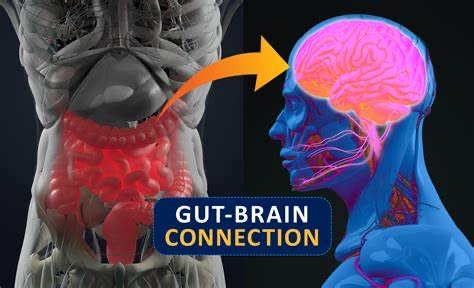
The Gut – Brain Connection
The vagus nerve runs from your brain through to your abdomen, its main function is to control your heart rate, digestion and immune response. Your brain has a direct effect on your stomach and intestines as they are connected through chemicals called neurotransmitters.
The consequence of these bidirectional changes is altered brain activity, causing depression and anxiety which is also true in the instance of irritable bowel syndrome – when anxiety can cause symptoms in the gut and vice versa.
Microbiome
Your microbiome is the trillions of organisms such as bacteria, yeasts and fungi that live in your digestive tract. Collectively these weigh 2kg – which is heavier than the human brain. It is also home to around 80 percent of your immune system and 95 percent of your ‘happy hormone’ serotonin.
The microbiome helps to control your mood, governs your appetite, controls your metabolism, weight, hormones and your immune system.
Low mood, depression, anxiety and mental health issues are largely associated with altered serotonin levels. For all its importance to mental wellbeing, 95% of serotonin is found in the gut not the brain. Therefore, healing of the gut is essential for mental health.
Among the many functions of our microbiome, it is responsible for synthesizing essential nutrients such as Vitamin K, Vitamin B12, Iron, Magnesium, Vitamin D and Zinc. It breaks down fibres and supports the immune system against invaders.
Microbiome play a major part in whether your heart is healthy and whether your brain feels sharp and clear or fuzzy and unfocused. They sustain the gastrointestinal tract, so your food is properly digested.
When these microscopic organisms flourish, you flourish, when they struggle, you struggle. When your microbiome craves sugar, you crave sugar. Serotonin (our happy hormone) is created during the digestion process. A food that takes longer to digest properly causes more serotonin to be secreted.