
Histamine structure
Histamine
Histamine is an organic nitrogenous compound involved in local immune responses of communication. Histamine regulates physiological functions in the gut and acts as a neurotransmitter for the brain, spinal cord and uterus. Even though histamine is small compared to other biological molecules (containing only 17 atoms), it plays an important role in the body. It is known to be involved in over 23 different physiological functions and it’s all thanks to histamine’s flexible chemical binding structure.
However, histamine and inflammatory mediators have a primary role which is to defend the body against viruses, bacterial infections, toxins and allergic compounds. For example, when your body is exposed to a compound like pollen your mast cells will fire off histamine and set off the alarm for your immune system to target this ‘perceived’ potentially dangerous allergen.
The histamine itself can leave you with symptoms such as sneezing, coughing, runny nose, breathlessness, headaches, itching and in some extreme cases can be life-threatening. Despite the discomfort that these symptoms can cause, these chemicals play an important and complex role in the body’s defences. But like so many biochemicals, they are a double-edged sword that we depend on it but can cause a multitude of health problems.
Histamine Intolerance
Histamine Intolerance is very poorly understood by the medical profession, current research shows that it that affects 30-50% of the population, but it is very underestimated and much more common in females.
HIT is a condition that is characterised by the development of a diverse set of symptoms. A common cause is the ingestion of high histamine containing foods such as tomatoes, shellfish, alcohol, fermented foods, citrus fruits, aged cheese and spinach.
Although it is described as a “histamine intolerance” it is neither an allergy, nor an intolerance, but more a condition of excess histamine, which is multifaceted.
Importantly, HIT is not solely due to dietary histamine, but exposure to: stress, emotional trauma, neurotransmitter imbalance, sex, barometric pressure, temperature, weather, vibration, friction, exertion, exercise, toiletries/perfume, makeup, chemicals, pollen, environmental toxins, dyes, preservatives, medicines, antibiotics, anaesthetics, fluorescent lights, mould, dehydration, dysbiosis, vitamin deficiencies, infections, bacteria such as Lyme disease and viruses such as covid.
Mast Cell Activation Syndrome
Although one of the main functions of histamine is associated with allergic reactions, it is also an in important neurotransmitter and immune messenger molecule. Histamine is stored in mast cells and subsequently released when these cells are activated.
Mast Cell Activation Syndrome (MCAS) is a condition in which your mast cells release too many inflammatory mediators too often
According to Dr. T.C. Theoharides, an expert in the field, “Mast cells are ‘universal alarm cells’ that start the inflammatory cascade. They can be triggered by infection, allergens, environmental factors like pollution, or even emotional stress. Once that happens, mast cells set into motion a series of inflammatory reactions, including the activation of immune cells and the release of tumor necrosis factor-alpha (TNF-a), a pro inflammatory protein or cytokine.”
The main categories of mast cell locations are mucosal and lining tissues in the nose, sinuses, eyes, mouth, entire digestive tract, bladder, blood vessels, lungs, cardiovascular tissues, arteries, veins, capillaries, heart, connective tissues, ligaments, tendons, bones/marrow, joints, lymphatic system, hair follicles, skin, nerve tissue and parts of the brain. The mast cell related symptoms depend on which mast cells are triggered.
Additionally, Histamine Intolerance can be seen alongside Mast Cell Activation Syndrome because when mast cells are triggered, they release histamine. Constant mast cell activation can lead to a steady stream of histamine and chemicals in the body. If the body can’t keep up with eliminating these then you can end up with both MCAS and histamine intolerance.
N-methyltransferase (HNMT) and Diamine oxidase (DAO)
When histamine is formed, it is broken down by specific enzymes. In the central nervous system, it is metabolised by histamine N-methyltransferase (HNMT), while in the digestive tract it is broken down by diamine oxidase (DAO).
Diamine oxidase (DAO)
Diamine oxidase (DAO) is the major enzyme involved in histamine metabolism and is responsible for ensuring a steady histamine level required for the balance of numerous chemical reactions taking place in the body.
DAO is the key enzyme responsible for the degradation of extracellular (free) histamine, regardless of whether the histamine originates from allergy-induced processes in the body or is consumed with food.
Histamine is degraded to imidazole acetaldehyde which, after methylation as a methylhistamine, is eliminated via the kidneys. This allows the body to retain optimal amounts of histamine all the time.
Low DAO enzyme activity can be linked to genetics that reduce the ability to degrade histamine efficiently, age (being over 40), gut inflammation and related dysbiosis, alcohol, certain medications and nutrient deficiencies such as copper.
N-methyltransferase (HNMT)
HNMT plays an important role in regulating histamine as it breaks down histamine on an intracellular level. HNMT inactivates histamine by transferring a methyl group from S-adenosyl-L-methionine to histamine (N-methylation).
HNMT is expressed in many human tissues, with the highest levels found in the liver and kidneys, but also in the bronchi and trachea. HNMT is a key enzyme concentrated in the liver which is responsible for degrading histamines generated as a result of the functions of the body and in particular mast-cells. The liver filters the blood to remove fat-soluble toxins, then disassembles those toxins into water soluble toxins, ready for excretion.
Also, HNMT is the key enzyme for degrading histamine in the bronchial epithelium.
MTHFR
Although MTHFR is not directly linked to histamine intolerance, mutations in the MTHFR gene may impair methylation, which can then affect the function of HNMT. HMNT is one of the two major enzymes involved in histamine metabolism and requires the availability of S-adenosylmethionine (SAM-e) to eliminate histamine from the body. High histamine levels may be associated with low methylation and reduced SAMe synthesis.
B12 and Histamine
Vitamin B12 is not directly linked to histamine levels, but it is also required for the methionine cycle that produces SAMe (the methyl donor HNMT uses to break down histamine). B12 deficiency may impair SAMe production, which may then affect the function of HNMT and result in poor histamine clearance.
The Histamine Bucket Theory is a simple but powerful visual aid that can help us understand how histamine builds up in the body and why we might experience symptoms when levels get too high. This analogy is often used by people living with MCAS, Histamine Intolerance, or other related conditions, as it provides a clear and relatable way to explain how different triggers contribute to overall histamine load.
Rather than seeing symptoms as isolated or random, the bucket analogy helps us recognise that multiple small exposures, each seemingly manageable on their own, can add up over time. It shows that our bodies might tolerate certain triggers one day, but react the next, depending on what else has been added to the “bucket.” For example, a food that was well tolerated yesterday might cause symptoms today if combined with stress, a lack of sleep, or exposure to environmental allergens.
The Histamine Bucket
Histamine intolerance could be the cause of your symptoms.
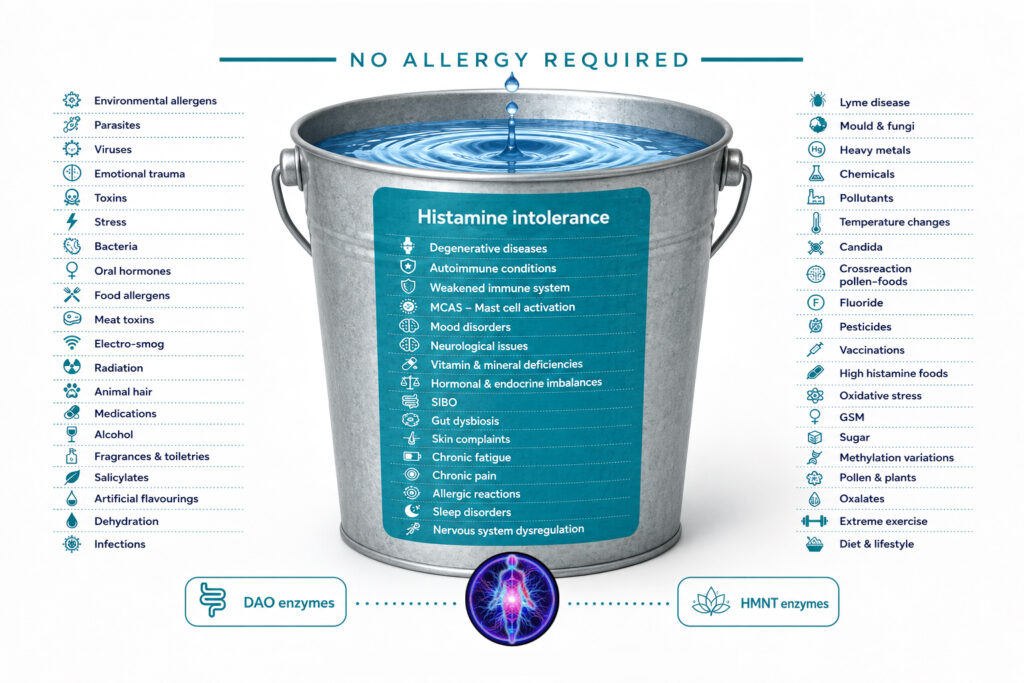
Histamine page: a summary.
Histamine supports immune, neurological and digestive functions but excess levels can trigger widespread symptoms. Histamine intolerance and MCAS may result from genetics, lifestyle, environmental triggers, impaired detoxification and enzyme deficiencies.